Questions and answers to ask SEO clients | SEO QA
According to It depends on the quality SEO work and the quality SEO service success depends on getting the superior reply of SEO QA.
I usually used to ask my SEO clients these SEO questions and answers, Which I have formatted In the below, I have presented this SEO QA form to know the SEO client's business in good,
aiming to serve them the best SEO services ever.
Search Engine Optimization Question and Answer (SEO QA):
I think right now You as an SEO client most probably you are asking yourself for SEO ask:
What am I expecting?
What will I get?
What would be the SEO impacts?
If this is the situation, then I would like to request you to stop your thinking and please go to fill up the Questions and Answers (QA) form,
Where I have tried to understand your (the client) SEO expectations:
SEO expectation #1. Accessing new customers.
SEO expectation #2. Increasing web traffic.
SEO expectation #3. Increasing brand awareness.
SEO expectation #4. Building audience trust.
SEO expectation #5. Assuring brand presence.
SEO expectation #5. Gaining social media followers.
SEO expectation #6. Increasing numbers of email subscribers.
SEO expectation #7. Generating online sales lead.
SEO expectation #8. Growing content engagement rate.
SEO expectation #9. Maximizing return on investment.
SEO expectation #10. Enhancing SERPs rank.
SEO expectation #11. Increasing DA and PA.
SEO expectations #12. Overall SEO goodies will include after completing the Client Registration form in the SEO proposal letter.

27 SEO Questions & Answers to ask SEO clients at a glance (?):
#1. May I Have Access to the Following Items?
#2. What are Your Main Goals and KPIs?
#3. What is Your Current ROI and Goal ROI?
#4. Who is Your Ideal Customer?
#5. Which Countries are You Targeting?
#6. What Is Your Main USP? (Unique Selling Point).
#7. What Other Marketing Verticals are You Investing in?
#8. Who Was Your Previous or Current SEO Agency?
#9. Are There Any SEO-Related Documents We Can See?
#10. Have You Ever Had a Google Penalty?
#11. What is Your Level of Understanding When it Comes to SEO?
#12. Who Do You Consider to be Your Main Competitors?
#13. Do You Own Any Other Domains or Subdomains?
#14. Do You Have an In-House Developer?
#15. What Level of Support Will We Have From the In-house Team?
#16. Are You Willing to Invest In SEO Tools?
#17. What kind of CMS was the website built on?
#18. Are There Any Plans for a Website Redesign?
#19. Do You Have Any Other Offices Around the World?
#20. Do Changes Need to be Approved By Legal Before They Go Live?
#21. What is Your Budget for SEO?
#22. How Involved Would You Like to Be?
#23. Do you Have Any Brand Guidelines?
#24. Do You Have a Specific Writing Style You’d Like?
#25. Do You Have Any Design Assets We Can Have Access To?
#26. Do You Have Any Partners Who Would be Willing to Link to Your Website?
#27. What challenges are you currently facing with SEO?
So, Are you ready to help me to help you, If so then let's start answering:
If you have any asking about this post, then share with us on our social media channel LinkedIn Pinterest Twitter Facebook Instagram Quora

Are you ready to share your (SEO client) answer for SEO QA before hiring me as your SEO partner?
Let's join over a uber conference on 01/11/2019 and to participate in this event, please click here on-
 to add it this on your calendar.
Note: We the SEOSiri understand your privacy that's because of your email ID is private to us and we just collect it for better communication.
Special thanks to Gillon Hunter, Whose titled article "26 Questions to Ask Potential SEO Clients" has helped me to build this SEO QA form for the clients.
How to make the best massive money with social media marketing partnership
 |
| "Promoting content with the Facebook micro-influencers is more engageable rather than to promote content on a large Facebook group" #MomenulAhmad. |

Step #2: Linking the brand home page in your Facebook profile details.
Step #3: Partners Facebook Profile should be public.
Step #4: Partner's Facebook Page age should be a 1-year plus.
Step #5: Social Media Marketing Partner's Facebook Page follower should be 1k (one thousand) plus to above.
Step #6: You have to place a brand's home page link (hateemtai.com) on your page about section and on your Facebook Group description.
Step #7: Need to write an authentic review (top rated and must be recommended) on the brand page.
Step #8: Need to write a real review on the branded Facebook Page (recommendation) with a rating.
Step #9: You have to update your profile or page image with current promotional images also have to like and follow your partner's page to stay up to date with them.
Step #10: Facebook post images should be included, post relevant anchor text must have to mention them.
Step #11: Using this hashtag (#hateemtai) is a must on every post.
Step #12, 13, 14, 15--- more may be added as a basis on service demand.

If you have any asking about this post, then share with us on our social media channel LinkedIn Pinterest Twitter Facebook Instagram Quora
How to prepare the best search engine optimization (SEO) proposal
Is it too much tough to prepare a Search Engine Optimization (SEO) proposal?
- How do I make an SEO proposal?
- How do you write an SEO proposal?
- How do I approach an SEO client?
I want to assure you that preparing a high-performance SEO proposal is not as tough as you think. I have designed this ultimate template considering your specific needs, bridging the gap between technical requirements and client expectations. This proven template covers both On-page and Off-page SEO strategies designed to bring in high-quality leads.
Important Parts of an SEO Proposal
Think of your proposal as a mirror: it represents your company's SEO expertise to your prospective clients. When writing a sales-prospect SEO proposal, you must focus on the client's expectations and needs first, then highlight your achievements and provide definite technical solutions. Never break commitments and always strive to guide them through the process.
An SEO proposal letter should be actionable, measurable, and remarkable. Include these 7 critical steps:
- Focusing on client's expectations: Aligning your goals with their vision.
- Understanding client's needs: Identifying the technical gaps in their current infrastructure.
- Highlighting achievements: Proving your authority with data-driven results.
- Giving definite solutions: Providing a clear roadmap to fix specific SEO issues.
- Suggesting and guiding: Acting as a consultant, not just a service provider.
- Commitment: Ensuring every milestone is met on time.
- After-service consultation: Building long-term value beyond the initial project.
What Should You Include in Your SEO Proposal?

SEO terms to include in the professional SEO service proposal
As an industry expert, I made this tech-savvy SEO proposal by researching the international SEO marketplace and local markets in Bangladesh. This is optimized for international brands, global business owners, and foreign individuals seeking high-performance search visibility.
Since this is a high-level technical process, you may need a specialist's touch. Contact us to assist you, Inbox me on Messenger, or reach out via LinkedIn to complete your SEO goals.
The Core 19-Step SEO Strategy Checklist
Step 1. Introduction: Briefly set the context and professional objectives of the SEO campaign.
Step 2. What is SEO? Define search engine optimization to align technical understanding with the client.
Step 3. What You Need to Know: Education on core SEO principles like authority and relevance.
Step 4. Auditing Your Website: A deep dive into technical health to identify existing bottlenecks.
Step 5. Crawling and Indexing: Ensuring that search engines can discover and store your site data correctly.
Step 6. Ranking: Developing the strategy to improve your visibility for high-intent keywords.
Step 7. Who We Are: Presenting SEOSiri’s credentials and specialist background.
Step 8. Our Approach: Detailing our unique methodology for achieving sustainable organic growth.
Step 9. Analytics and Keywords: Data-driven research to select keywords that drive actual sales leads.
Step 10. Accessibility and Indexing: Optimizing site architecture for both users and search bots.
Step 11. Ranking Factors: Focusing on signals like UX, speed, and mobile-readiness.
Step 12. Competitive Analysis: Benchmarking your domain against rivals to find market gaps.
Step 13. Services Pricing: A transparent monthly breakdown of the technical service costs.
Step 14. SEO Portfolio: Showcasing our technical expertise through proven case studies.
Step 15. Down Payments: Outlining initial financial commitments to initiate the workflow.
Step 16. Terms: Defining the professional boundaries and operational framework.
Step 17. Payment: Specifying secure methods and schedules for project billing.
Step 18. Warranty: Guaranteeing ethical "white-hat" SEO practices and original work.
Step 19. Agreement: The final step to sign and begin the journey toward search dominance.
Search Engine Optimization Proposal Framework
(On-Page SEO & Off-Page SEO)
Prepared for: [Your Company] | Prepared by: SEO Siri | Date: 16/08/2019
Introduction
There has never been a more crucial time for a business to maximize its online presence in the savviest, most effective way possible. If your company is buried in search results, you essentially don't exist. SEOSiri is here to solve that via deep Search Engine Optimization and Social Media Intelligence.
Website Accessibility & Indexing
For your website to be visible, search engines must find it. We optimize crawling through relevant, indexable content and technical markers like alt tags.

Technical Ranking Factors
We ensure your content is relevant and keywords are used without duplication. Our goal is to ensure your source code is perfectly optimized for crawlers.
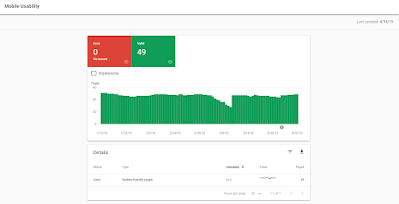
Competitive Analysis
We perform deep comparative analysis against your rivals to create a plan for deliverable items that will improve your rank and drive traffic.
Monthly SEO Pricing Estimates

Subtotal: tk21,000.00 | Monthly Total: tk7,000.00 | Down Payment: tk7,000.00

SEO Progress Report Preview
Highly Recommended SEO Resources
| 1. Digital Marketing Cost | 4. Economy SEO Deals |
| 2. Webinar Submissions | 5. SEO Cost Guide |
| 3. SEO Approaches | 6. Backlink Building |
| 7. Content CTR Guide | 8. Service Offer Template |
Was this content helpful? Share your thoughts with us.
Invitation: If you are looking for a digital marketing specialist, Request a Quote or Schedule an Appointment for personalized digital marketing help.
Essential Context Links:

Momenul Ahmad
Technical Architect and Founder of SEOSiri. Helping businesses navigate search in the AI era (AEO/GEO) through data-driven engineering and ethical marketing strategy.
Last updated: April 2026 | SEOSiri Technical Audit
Is it possible for me to become a software developer without any programming degree?
Challenged by My Mom: Can I Become a Software Developer Without a Programming Degree?
Her words sparked a mission in me — one that led to deep questions, real answers, and the start of my journey into software development.
2. How are others becoming software developers without any degree?
3. Why isn't possible for me to become a software developer without knowing any programming language?
4. How is it possible to become a software developer without a programming degree?
5. What's the ultimate guide to learn software development?
Here’s the interesting part:
My very first search term was “The ultimate guide to learn software development for zero coders.” That search led me to a well-optimized piece of SEO content focused on programming. From there, I began to dive deeper into the world of software development.
One step led to another — I was inspired, guided, and eventually driven toward becoming a successful web developer.
That’s when I fully immersed myself in the world of software development — a space where a developer-turned-author had carefully documented his journey, lessons, and insights.
He emphasized that proper planning is essential when learning anything new. Drawing from his real-life experience, he offered a structured approach to learning software engineering.
According to him, the best way to learn Software Engineering is by following a clear, step-by-step roadmap — ideally broken down into eight essential steps:
The first step is to select a platform of your own choice.
For example, if you're interested in web applications, then learn web application development to build one. If you're drawn to mobile platforms, then learn Android application development to create Android apps.
Most software developers today are Web Application Developers because there is a significant demand for web-based solutions. I believe it's easier and faster to build a career as a Web Application Developer.
The second step is to learn programming for the platform you've chosen.
For instance, if your focus is on web applications, then begin with web programming.
The third step is to try solving five real-life problems through application development.
Personally, I solved my own challenges by developing tools like Pension Calculator BD and GPF Calculator BD.
The fourth step is to gain a clear understanding of all the stages of the Software Development Life Cycle (SDLC).
The fifth step is to learn what tasks need to be done in each step of the SDLC — from planning and analysis to deployment and maintenance.
The sixth step is to learn project planning for developing software. I have faced the following problems during learning about Web Development and tried to solve them through Learn Web Development Easily with a project planning:
1. What should be learned to be a Web Developer?2. Which language shall I need to learn after completing one language?
3. How skilled am I in the language that I have learned?
4. Is there any mistake in my learning?
5. What should I do to increase my skill?
6. Am I skilled enough to learn a new language?
7. Have I become a Web Developer?
The seventh step is to form a skilled team to bring your project plan to life and to develop your ability to manage a team effectively.
For example, I created a dedicated team to build the project "Learn Web Development Easily."
The eighth step is to expand your development skills across multiple platforms.
Once you complete the software engineering process for one platform, begin applying your knowledge to other platforms to grow into a well-rounded, professional Software Engineer.
After reading this software development guide, I felt a deep sense of happiness and renewed confidence—proof that becoming a software developer without a formal computer science degree is not only possible, but achievable.
Here is a complete rearrangement of that section. I've restructured it into a clean, professional, and genuinely useful summary that is much easier to read while still highlighting the guide's comprehensive nature.
Here is a complete rearrangement of that section. I've restructured it into a clean, professional, and genuinely useful summary that is much easier to read while still highlighting the guide's comprehensive nature.
A Comprehensive Roadmap: What's Inside the Guideline?
This programming career guide from WDguideline (a site focused on software engineering) taught me more than just technical skills. It provided a structured roadmap for a self-taught journey into tech, turning a complex and intimidating field into a clear, step-by-step process.
Instead of just theory, the guide is broken down into nine distinct sections, covering 67 core topics. Here’s a look at what you will learn:
1. Foundational Concepts for Beginners
This section demystifies the core concepts every new developer must know. It answers fundamental questions like "What is the internet?", "What is a server?", and clarifies the roles of IP addresses, domains, and web hosting.
2. Core Web Technology
Building on the basics, this part dives into the mechanics of the web. You'll get clear explanations of what a website is, how WWW and HTTP work, and the distinction between web development and web design.
3. Beginner Web Developer Guidelines
This is a practical career guide. It outlines how to become a Front-End, Back-End, or Full-Stack developer without a traditional degree, offering advice on common programming problems and estimating how long it takes to learn.
4. Software Engineering Principles
5. Programming Languages & Careers
Here, the guide focuses on the tools of the trade. It defines what a program and a programming language are, and outlines the different career paths available, such as Programmer, Software Developer, and Computer Scientist. This has helped me to find the answer to how to become a Full Stack Developer without a degree.
6. Building a Freelance Career
For those interested in entrepreneurship, this section provides a complete guide to freelancing and outsourcing. It explains how freelance marketplaces work, what skills you need to succeed, and how to get paid for your work.
7. From Freelancer to Founder
Taking the next step, this part provides guidance on how to establish your own company, focusing specifically on creating a web development agency from the ground up.
8. Understanding Hacking
To build secure software, you must understand its vulnerabilities. This section provides an ethical overview of hacking, explaining what it is, the different types of hackers, and the realities of a career in cybersecurity.
9. Final Advice & Next Steps
The guide concludes with actionable advice, summarizing the key takeaways and providing direction for continuing your learning journey effectively.
What I Faced, What I Solved, and What I Learned on My Journey to Becoming a Software Developer Without a Degree
This sub-heading frames your experience as a personal case study — one that builds credibility and inspires readers following a similar non-traditional path.
Final Thoughts: Why This Guide Changed Everything for Me
After reading this comprehensive software development guideline by WDguideline, I found the confidence, clarity, and structured learning I had long been searching for.
It didn’t just answer my beginner questions — it helped me build a roadmap, identify my weaknesses, grow my strengths, and enter the world of programming with purpose.
From learning web development and programming languages to understanding freelancing, startups, and even cybersecurity, every section pushed me a step closer to becoming a complete software developer.
So, is this guide helpful for aspiring developers without a computer science degree?
Absolutely. It's not just helpful — it's empowering.
👉 If you’re serious about building your future in tech from scratch, I highly recommend checking out the full guide here: (PLACEMENT AVAILABLE)
➡️ Visit the Full Book – WDguideline (site unavailable)
🔗 Featured on LinkedIn
We’re honored to be featured by Janella Malapad in her recent LinkedIn post spotlighting SEOSiri’s approach to ethical SEO and digital marketing excellence.
This recognition aligns perfectly with our mission to empower aspiring developers — even those without formal degrees — as shared in our article: “Is it possible to become a software developer without a programming degree?”


